"Convergence of two repressors through heterodimer formation of androgenreceptor and testicular orphan receptor-4: a unique signaling pathway in the steroid receptor superfamily".
In this review we summarize recent advances in understanding of the epigenetic mechanisms of AR action as well as newly recognized aspects of AR-mediated androgensignaling in both men and women.
The classical action of androgenreceptor (AR) is to regulate gene transcriptional processes via AR nuclear translocation, response element binding and recruitment of, or crosstalk with, transcription factors. AR also utilises non-classical, non-genomic mechanisms of signal transduction.
The androgenreceptor is a member of a superfamily of nuclear transcription factors that mediate the action of steroid hormones. When activated by ligand binding, these transcription factors bind to specific DNA sequences on target genes and regulate the transcriptional activity of those genes.
Androgens promote the growth and differentiation of prostate cells through ligand activation of the AR (AndrogenReceptor) (Ref.1&2). The AR, upon activation by Androgens, mediates transcription of target genes that modulate growth and differentiation of prostate epithelial cells.
The Androgenreceptor (AR) is known to manifest the biological actions of male sex hormones. Androgens are now known to exert a multitude of responses, sometimes contrasting, in physiological and pathological conditions.
The development of future therapies will hinge on precisely targeting the androgenreceptorsignaling pathway, necessitating a deeper understanding of the molecular targets unique to castration-resistant prostate cancer.
The androgenreceptor is known to bind to many co-regulators at different time points and in different cell types. This DNA protein complex triggers the expression of various target genes that are associated with the male phenotype.
AR signaling starts in the cytosol where hormone binding releases the receptor from a chaperone complex, leading to receptor homodimerization and nuclear translocation and binding to androgen response elements in the regulatory regions of AR target genes.
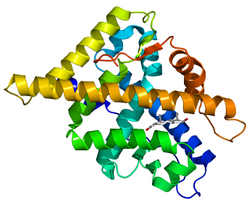 "Convergence of two repressors through heterodimer formation of androgen receptor and testicular orphan receptor-4: a unique signaling pathway in the steroid receptor superfamily".